
Getting to know the Leica M EV1
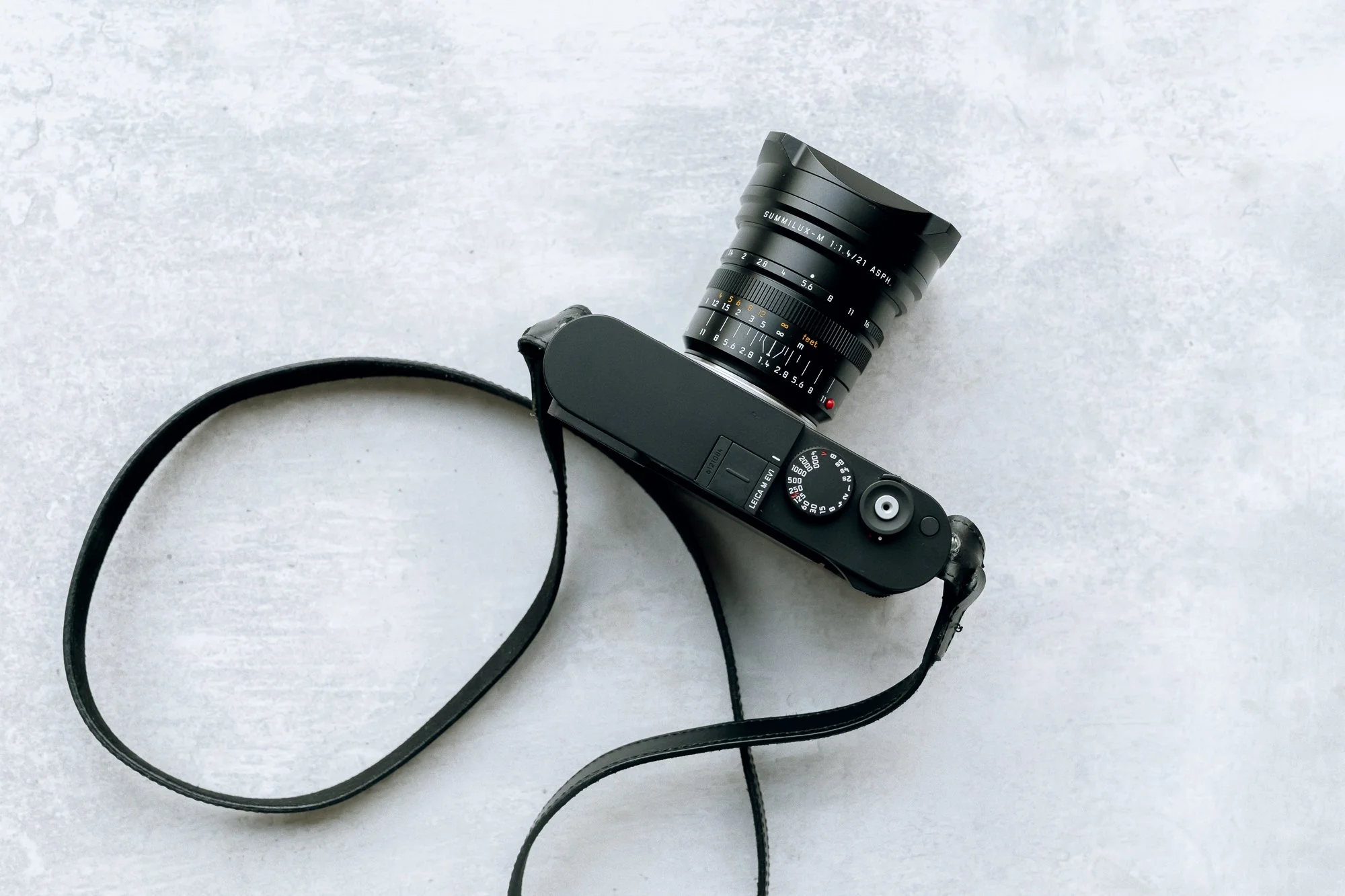
I spent the last week shooting with the Leica M EV1 after Leica kindly sent one over for me to try. As soon as I mentioned it online, a good number of people in the community reached out wanting to know more. There was a real sense of curiosity about what this camera actually is, where it sits and how it feels to use. Quite a few also asked whether it still carries that familiar Leica character and what I personally make of it. Rather than giving quick replies, I thought it made more sense to put something a little more in depth together.
What struck me early on was the range of responses. Some people were genuinely excited to see this development. Especially those who have struggled with the traditional rangefinder approach and have felt slightly on the outside of the M system because of it. Others had stepped away from the M bodies due to eyesight changes or because glasses started making the optical finder awkward. For some of them, this feels like a welcome shift and possibly a way back in.
Then there were the quieter, more cautious reactions. A raised eyebrow here and there. Not negative, just thoughtful. That mix of enthusiasm, hesitation and curiosity around something new opened up a nice conversation, which encouraged me to collect my own thoughts here.
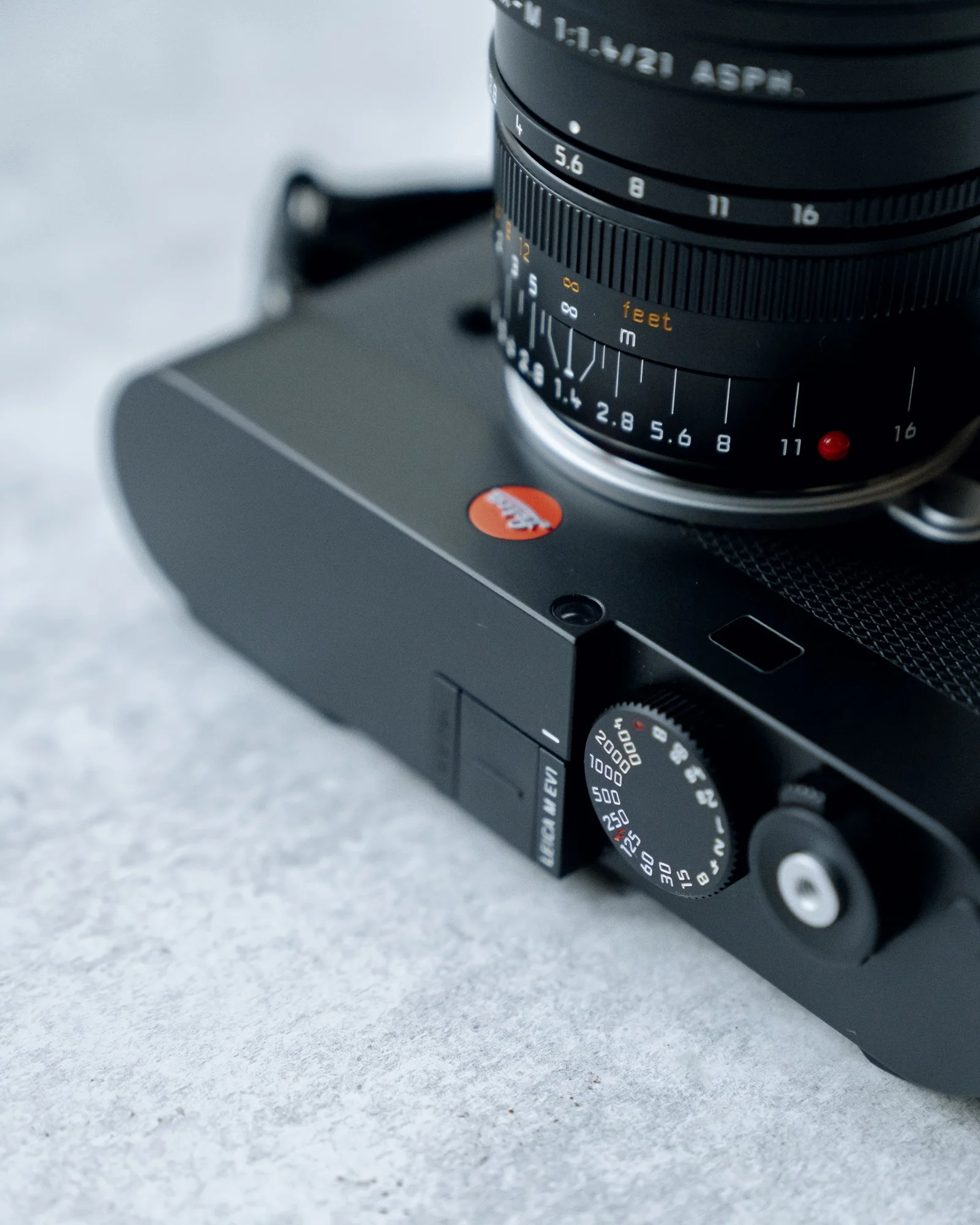
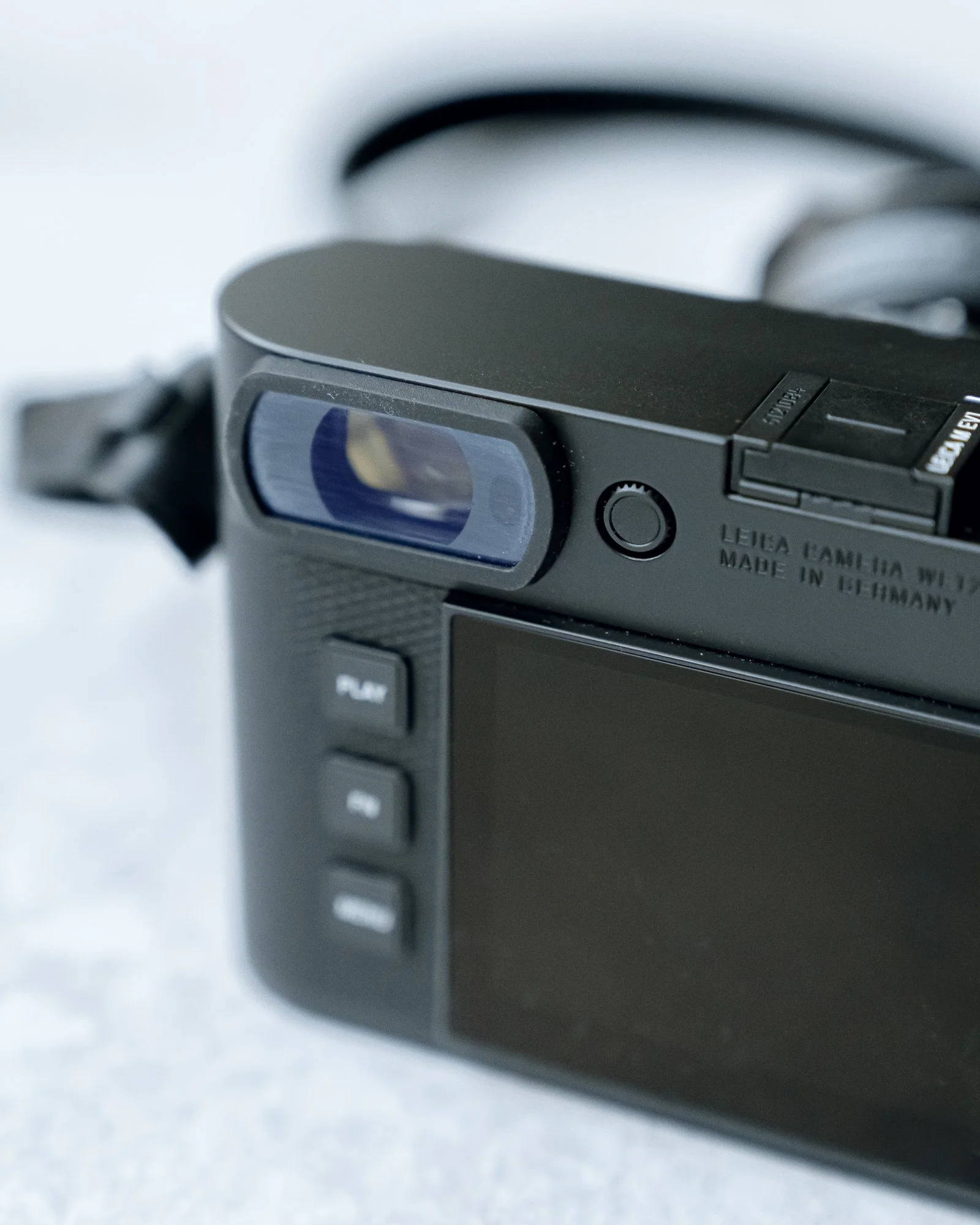
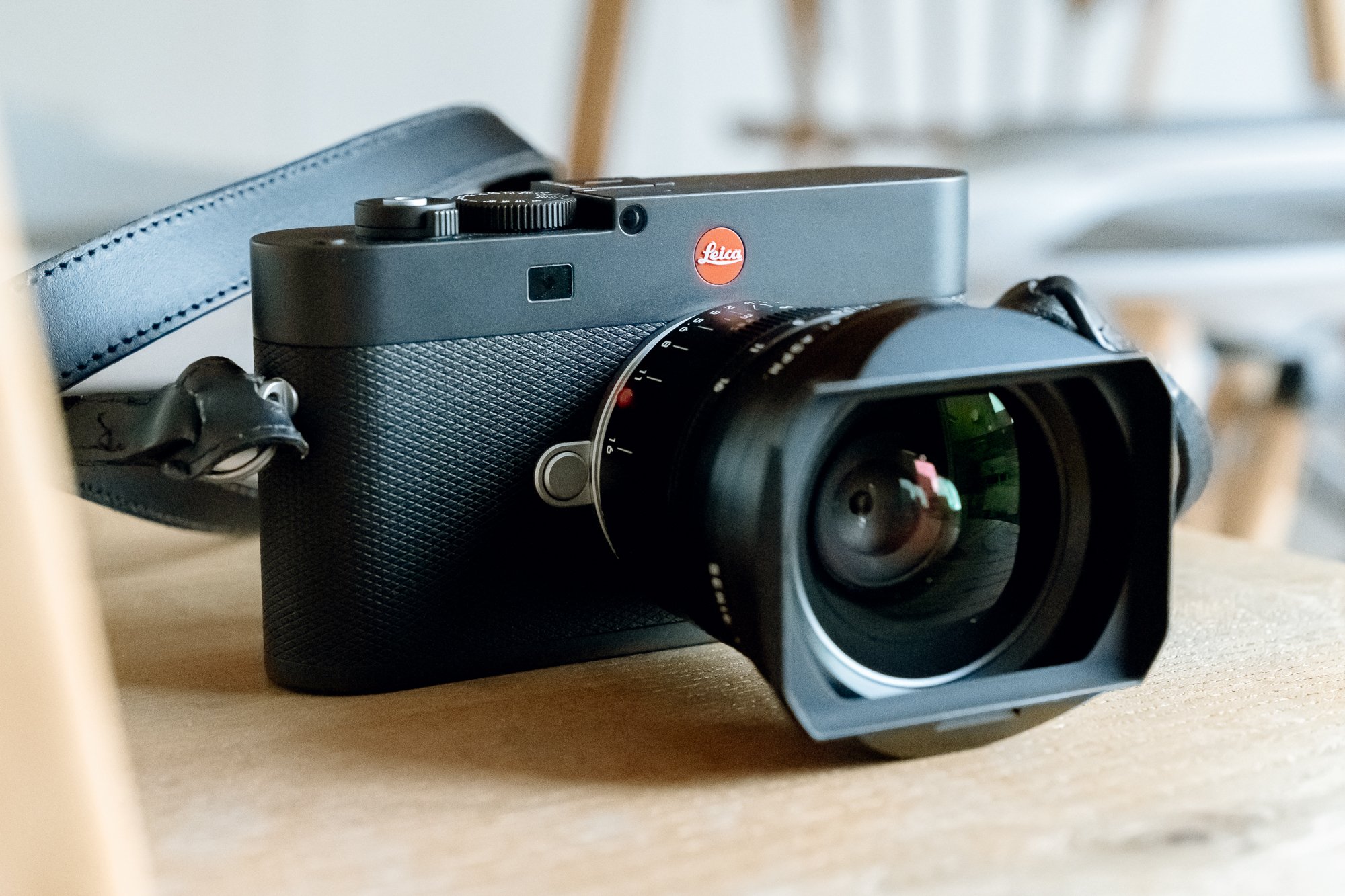
Picking up the EV1 felt comfortable straight away. It has the same confident build quality you expect from a Leica M. Solid, clean and very minimal on the front. The biggest visual change is the absence of the optical viewfinder window. It takes a moment to accept that the front of an M body can look like this, but once you understand the intention behind the design it sits comfortably. It also is not entirely new. Some earlier film M bodies shared this simplified front face, like the MDa.
Switching it on and framing through the EVF felt surprisingly natural. The finder is clear and responsive, and after a short while I stopped thinking about it as a screen. Years of shooting Leica M cameras means the way I hold and move with them already lives in muscle memory, so the EVF just slipped into that pattern.
The main shift for me was focusing. I am very used to the speed and intuition that comes from the rangefinder patch. With the EVF I relied more on magnification or focus peaking when shooting wide open. These methods work and can give very accurate focus, but for my style they feel a little cumbersome. This is especially noticeable in faster paced environments.
During portraits the extra steps interrupt the flow a little. Those pauses become more obvious because they break the natural rhythm between me and whoever is sitting in front of the camera. The same would apply to my usual street photography where I prefer to stay inside the moment and move quickly. Of course, given more time, I imagine this would start to settle. It is only natural to feel the difference at first. I did also smile at the idea that if things were flipped, and a rangefinder patch was introduced today as a replacement for EVFs, we would probably all be a little shocked. Perspective is everything.
Leica also sent over the 21mm Summilux to pair with the EV1. On a traditional M body I would normally need an external viewfinder for that focal length. Here the entire frame appears directly through the EVF. For anyone who enjoys working wide or wants to be confident about what is happening at the edges of the frame, this setup will feel very intuitive. In my own seafront work I often build compositions using layers and foreground shapes. An EVF like this can help shape those decisions with more clarity. It removes a lot of the guesswork that comes with an optical finder when dealing with close elements or small details around the borders. It essentially eliminates the parallax issue.
For the portraits I shot with my friend Matt, I used my own 35mm Summilux. It is a lens I know well, which made the comparison much clearer. The EV1 delivered very precise focus, but the M11-P still feels more aligned with how I work during portrait sessions. It suits the pace I enjoy and allows the connection with the sitter to remain unbroken. People often say the camera melts away once that connection forms, and I do find that to be true.


As I continued using the EV1, I kept thinking about the overall feel of the camera. A traditional M body has a certain simplicity. You can lift it to your eye even when it is switched off and still see the world through the optical finder. The EV1 needs power before anything appears, and this gives it a slightly different personality. Not soulless, just more modern. Some people will connect with that straight away. Others may prefer the older rhythm.
After a week with it, I have a clearer sense of who this camera will suit. Anyone who likes the idea of M lenses but never quite adapted to the rangefinder method will feel comfortable with it. Anyone who wears glasses or sometimes struggles with the optical finder will also find it more inviting. I can see it being very effective for commercial work where framing accuracy matters and where wider or longer lenses are often used. There are also aspects of my own seafront work where the EVF would be helpful, especially when shaping frames with a lot of detail or depth.
Where it feels less ideal is in portrait work or street photography where I rely on a sense of flow and speed. Not because the camera is incapable of it, but because I am deeply used to the traditional rangefinder system. With more time I would adapt, but after only a week there is naturally a bit of a learning curve.
On reflection, there are both positives and drawbacks. Whenever something new arrives and shifts how we approach things, it is natural for people to feel uncertain and maybe lean away from the unknown. I see this a little differently. Rather than viewing it as choosing between one or the other, I see it as another tool for different types of work. EVF cameras have become incredibly popular across the industry. So why not have an M version too.
I have put in years learning and refining how I shoot with M bodies, and it is now second nature. Not everyone has that. For those people, an EVF based M could be a great solution. Does that mean this camera is not for me? Not necessarily. Different tools for different jobs, as I have said to a few of you who asked for my thoughts. There are definitely times when this style of camera would benefit both my personal and commercial work. The real trick is understanding where and when to use it. Would it become my daily driver? Probably not, simply because I am comfortable and fast with the rangefinder. But could it play a role in my work? Yes, absolutely.
These are just my thoughts, and whether this camera is right for you will most likely come down to where you are in your own creative journey and how you intend to approach the rangefinder world. It is new, it is different and it is worth taking a look at.
P.S
To the Leica design team, if you ever come across this, then I am flattered to have your attention. I could not resist adding a few thoughts on something I would love to see in the future. The EV1 is an interesting step in a direction none of us expected for the M, so I am going to pitch my own little concept.
For me, Leica M cameras speak of heritage, relationship, mechanical mastery and tactile interaction. I would love to see a specialist model that leans into that even more. The digital M progression is strong, but I miss some of the mechanical nuance and physical charm you find in the film bodies. The M9-P still held onto a little of that with the visible screws and the illumination window that allowed you to see the frame lines even when the camera was off. Those small details connected it back to the lineage that made Leica what it is.
What I imagine is essentially an MP with a digital sensor inside it, but not just in shape. I mean the details. The tactile nature of the film bodies. The way they feel in the hand. There is a noticeable difference between the character of a modern digital M and the personality of something like the MP or even the M8, which still carried traces of that mechanical heritage. I would love to see those qualities reintroduced into the current digital line. Even down to the small film-count style window with the little domed piece of glass over the top. In a digital context this could house something like an E-ink display, perhaps showing battery percentage or shots taken, similar in spirit to how the M8 used that space but with the ability to switch between different useful indicators.
If space allowed, I would keep the advance lever too. Not just for the look, but for the pleasure of it. Ideally with the option to actually cock the shutter if the internal mechanism could accommodate it. I could even forgo a rear screen. If one had to be included, something very low profile would keep the silhouette clean. Buttons could be removed entirely, with the screen handling whatever limited functions remained.
The sensor design is naturally separate, but I would still love the ability to introduce custom profiles, curves and colour treatments in the software. The recent move toward custom white balance settings hints at what is possible, but I would love to explore that further. A more personalised digital M. Something that feels like it reflects the person using it, the way the mechanical bodies always have.
Just a few thoughts from me. I hope you enjoyed reading this one, and if it sparks conversation, feel free to reach out.